Wine Storage for Hot Climates: How to Keep Bottles Cool and Safe

*Pictures are renderings. Actual wine racks may look different
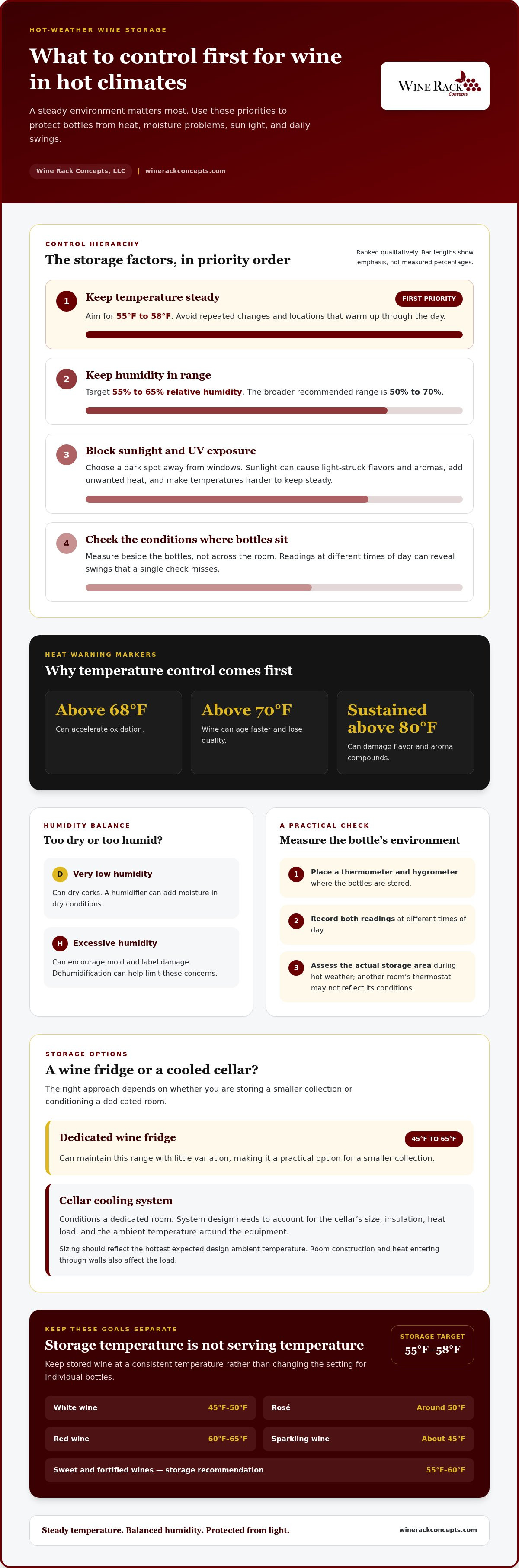
Hot-weather wine storage calls for more than finding the coolest corner of the house. For wine storage in hot climates, aim for a steady 55°F to 58°F and relative humidity of 55 to 65 percent, while protecting bottles from sunlight and temperature swings.
Heat deserves special attention: prolonged warmth can accelerate wine’s aging and reduce its quality, while very dry or humid conditions create other concerns. A garage, kitchen, or sunny closet may be convenient, but temperatures there can fluctuate more than you expect.
This guide covers ideal storage temperature, the effects of humidity and light, and how to choose a cooler spot at home. You’ll also learn why a hot garage can be challenging and how dedicated cellar cooling can help create a more controlled environment for your collection.
Key Takeaways
- Aim for a steady 55°F to 58°F and relative humidity of 55 to 65 percent, then monitor both conditions where the bottles are stored.
- Keep bottles away from direct sunlight and windows to reduce exposure to UV light and unwanted heat.
- Choose a dark, cool part of the home, and be cautious with garages, where heat and daily temperature swings can be substantial.
- In hot, humid spaces, managing moisture matters too: excessive humidity can contribute to mold and label damage.
- Learn what to consider when planning cellar cooling for a collection or adapting a garage for wine storage.
1. Does humidity matter as much as temperature for summer wine storage?
Humidity matters, but stable temperature remains the first priority for protecting wine during summer. Aim for 55°F to 58°F and relative humidity of 55 to 65 percent; the broader recommended humidity range is 50 to 70 percent.
Use a thermometer and hygrometer to record both readings where bottles sit, not across the room. Check them at different times of day, since a single reading can miss daily swings. Temperatures above 68°F can accelerate oxidation, while very low humidity can dry corks and excessive humidity can encourage mold.
For a clear demonstration of serving temperatures and practical cooling methods, watch this video:
Storage and serving are different goals. Keep wine at a consistent temperature rather than repeatedly changing the setting for individual bottles. For serving, whites are typically best at 45°F to 50°F, rosé around 50°F, red wine at 60°F to 65°F, and sparkling wine at about 45°F. Sweet and fortified wines are recommended for storage at 55°F to 60°F.
Do wine fridges compare with cellar cooling systems? Dedicated wine fridges can maintain 45°F to 65°F with little variation, making them a practical option for a smaller collection. Cellar cooling systems condition a dedicated room, so their design must account for the cellar's size, insulation, heat load, and the ambient temperature around the equipment.
System sizing should reflect the hottest expected design ambient temperature, not just a mild-day reading. As outdoor and surrounding temperatures rise, cooling capacity can change; the room's construction and heat entering through walls also affect the load. For a dedicated space, wine cellar cooling is designed for room-scale storage.
How much does either option cost in the United States? The price depends on the equipment, cellar size, installation approach, and heat load, and is given after a quote request.
How can you protect wine during outages and temperature fluctuations? Keep the fridge or cellar closed during an outage, and avoid moving bottles repeatedly between warm and cold spaces. When power returns, monitor readings and let the temperature stabilize before changing settings.
Does humidity affect storage, and how can you control it? Yes. Track relative humidity with a hygrometer. In dry conditions, a humidifier can add moisture; in humid conditions, dehumidification can help limit mold and label damage.
2. Protecting wine from sunlight and UV rays
Direct sunlight can make wine light-struck, leading to unpleasant flavors and aromas. It can also warm bottles and make storage temperatures harder to keep steady. For example, a bottle on a bright kitchen counter is exposed to both light and heat from its surroundings. Choose a darker spot for your collection, especially in summer, when sunny rooms can become warmer.
UV exposure isn’t limited to direct sunlight hitting a bottle. A window can brighten a storage area for hours, exposing nearby bottles and adding unwanted heat. Move the rack to an interior wall or a windowless room. If the room has a window, close the blinds during the brightest part of the day and keep bottles away from the glass.
A quick storage review can reveal overlooked sources of light and heat:
- Move bottles from windowsills, glass-fronted sunny displays, and counters near sunlit doors.
- Use a closed, opaque cabinet in a dark room rather than an open shelf near a window.
- Check the location at different times of day; morning shade may become direct afternoon sun.
- Keep wine deliveries indoors promptly, remove the shipping box, and place bottles away from direct sunlight.
A cabinet blocks direct light, but its location still matters. One against a sun-exposed exterior wall may warm up over the day. Check the cabinet itself, not just how the bottles look. If it feels warm after afternoon sun, move it to a cooler interior spot. Avoid using a brightly lit display for bottles you’re saving. A dark, stable location helps protect flavor while keeping your collection accessible.
When serving wine outdoors, keep the bottle shaded in a cooler between pours. This limits direct sunlight during a meal or gathering, when a bottle might otherwise sit on a sunny table. Bring remaining bottles indoors after serving rather than leaving them outside as the afternoon warms.
Light protection also belongs in the room plan. If you're deciding where a display and storage area should sit, consider window direction, cabinet placement, and how sunlight travels across the room. A wine storage design plan can help shape a layout around the room and collection, while keeping bottles away from bright windows and other warm areas.
3. Choosing a cool place for wine storage
Choose a location that stays close to 55°F year-round, rather than one that feels cool briefly. A consistent environment matters because wine stored above 70°F can age faster and lose quality. Sustained exposure above 80°F can damage flavor and aroma compounds. In a warm home, assess the actual storage area during summer instead of relying on the thermostat in another room.
A basement or lower level often offers a more stable setting than an upstairs room, but measure conditions before moving bottles. An interior cabinet, dark pantry, or closet can work for short- to mid-term storage if temperatures remain under about 75°F. Place a thermometer beside the bottles and record readings at different times. A single cool morning reading may not show how warm the space becomes later.
Some familiar household spots create avoidable temperature changes. Kitchens warm during cooking, especially near a stove or oven, so a cupboard beside appliances is a poor choice. Laundry rooms can also fluctuate as equipment runs. Keep wine away from windows, exterior walls that heat up, and appliances that release warmth. A closet near an outside wall can exceed 80°F, putting bottles at risk.
A regular fridge is useful for chilling wine before serving, but it is generally not the best long-term home for a collection. Traditional refrigerators commonly run between 40°F and 45°F, while regular models may operate at 35°F to 40°F. Those colder settings are too low for many red wines and can slow aging. A dedicated wine refrigerator is designed to maintain wine-storage temperatures with little variation.
- Measure the temperature where bottles will sit, including during the warmest part of the day.
- Prefer a lower-level or interior space over a kitchen, laundry room, or sun-heated closet.
- Use a closet only for short- to mid-term storage if it stays below about 75°F.
- Avoid shifting bottles repeatedly between cold and warm rooms; rapid changes can threaten wine quality.
- Store cork-sealed bottles on their sides to help keep corks moist.
Match the space to the collection and how long you plan to keep it. A few bottles for near-term enjoyment may suit a consistently cool, dark cabinet. Bottles intended for longer aging need steadier conditions, ideally near 55°F and within the recommended 45°F to 65°F range. If a home has no suitable room, a dedicated wine refrigerator can provide controlled storage without relying on a kitchen fridge.
4. Converting a hot garage into a wine cellar
A garage can become a wine cellar, but a rack alone won't control its climate. In a hot climate, a closed garage may reach 15°F to 25°F above outdoor temperature and experience daily swings of 30°F or more. Those conditions can expose Cabernet, sparkling wine, and other bottles to prolonged heat and rapid changes.
Start by measuring garage temperatures through warm days and nights. Take readings in several spots, including near the ceiling, exterior walls, and planned bottle storage area. These measurements show how much heat enters the space and help establish the design ambient temperature for cooling. A system sized for mild conditions may struggle when the surrounding air is much hotter.
Plan the cellar as an enclosed space, rather than treating the garage like an ordinary room. Insulation, air leaks, sun-exposed walls, doors, and room dimensions all affect how much heat enters. Reduce direct heat transfer before choosing cooling equipment. A frequently opened garage door also lets in warm air, so consider placing the cellar in a more protected section of the garage.
DIY construction can work for a small project, but the details need to work together. Seal the enclosure, plan where the cooling equipment will go, and leave clear access for maintenance and airflow. Keep racks away from heat-producing equipment and direct sunlight. Don’t assume an ordinary room air conditioner can maintain cellar conditions: room cooling and wine storage require different environmental control.
A freestanding wine fridge may suit a smaller collection without requiring you to convert the whole garage. Leave a few inches of clearance on all sides so heat can dissipate. Measure the intended location and check the conditions around the fridge, since placing it in an already hot garage can affect its operation. This is a more contained option than building a cellar, but it stores bottles inside the unit rather than conditioning a dedicated room.
For a built-in cellar, assess your storage needs before deciding on room dimensions. Plan rack placement around access, bottle formats, and the space required for cooling equipment. Keep everyday bottles separate from those being stored longer, so frequently opened bottles are easy to reach without disturbing the rest of the collection. A cellar planned for both storage and climate control is more practical than adding racks first and addressing cooling later.
Choose a setup that suits your collection and garage. A wine fridge can work for a compact arrangement; a dedicated cellar makes sense when you need storage and climate control throughout a room. In either case, assess the garage’s hottest conditions, enclosure, and equipment placement together before storing wine there.
5. Hot-humid climate condensate and vapor control
In a hot, humid climate, keeping a cellar cool creates a second challenge: moisture can condense on cold surfaces. Warm, moisture-laden air entering through gaps may meet a cooled wall, ceiling, or pipe. Water can then collect inside the enclosure, encouraging mold and damaging labels. Humidity above 80 percent can contribute to both problems.
The goal is to control the air and moisture entering the cellar, not simply lower the cooling setting. Seal air leaks around doors, wall penetrations, and utility openings to limit humid outdoor air reaching cold surfaces. Plan a continuous vapor-control layer as part of the enclosure, with placement suited to the complete wall and ceiling assembly. Poor planning can trap moisture instead of managing it.
Cooling equipment also removes moisture as it conditions air, so plan how condensate will leave the space. Follow the equipment design for collection and drainage, and keep the drain route accessible for inspection. A blocked or leaking line can leave water near the cooling unit, hidden behind bottles or racks. During routine cellar inspections, check for standing water, damp surfaces, and musty odors.
Monitor temperature and relative humidity inside the cellar, then compare readings with the conditions outside. The target range for wine storage is generally 55 to 65 percent relative humidity. If readings remain high, look for air leaks, damp building materials, and drainage problems before adding equipment. If humidity falls too low, corks may dry; if it rises above 80 percent, mold and label damage become concerns.
Use a practical inspection routine:
- Place a hygrometer near the stored bottles, away from a direct cooling airflow.
- Inspect corners, the ceiling, and areas around doors for condensation or dampness.
- Check the condensate drain for leaks or standing water, and keep its route clear.
- After heavy rain or a humid spell, review readings and inspect the cellar enclosure again.
For long-term storage, controlled humidity depends on the room enclosure, cooling, and condensate management working together. A cool cellar isn’t automatically a dry one: incoming humid air and drainage affect whether moisture builds up. Address the source of dampness rather than relying on a dehumidifier to compensate for constant air leakage. This helps protect bottles, labels, and the room itself.
Wine Rack Concepts: Wine Cellar Cooling
Wine Rack Concepts provides Wine Cellar Cooling for dedicated spaces designed for controlled wine storage. If a hot garage or warm room makes stable storage difficult, cooling can be part of a planned cellar rather than a stand-alone fix. The enclosure, ambient heat, and cooling requirements all matter.
For a complete solution, Wine Rack Concepts also offers Custom Wine Cellar design, with storage options such as the Wall Wine Rack Series and Classic Series. This can suit collectors planning a new cellar or adapting a space for a growing collection. Explore the wine cellar cooling options to see how they fit your project.
Visit winerackconcepts.com to explore your next step.
Plan a Storage Space That Grows With Your Collection
Effective wine storage for hot climates starts with a space suited to your collection and home. Think beyond the bottles you own today: consider which favorites you want to display, how your collection may change, and whether a dedicated cellar suits your space. These decisions make climate control part of a thoughtful storage plan, not just a stand-alone purchase.
Wine Rack Concepts offers Wine Racks, Wine Cellar Cooling, and Custom Wine Cellar design, bringing storage and climate control together in the planning process. A compact setup and a dedicated cellar need different solutions. The right approach depends on your room, collection, and priorities.
Take the next step by outlining your space and the kind of storage experience you want to create.
With a considered plan, you can create a space that protects your bottles and makes your collection a pleasure to enjoy.
Frequently Asked Questions
What Is The Ideal Temperature For Storing Wine?
A steady 55°F is a practical target for storing most wines, within a general range of 45°F to 65°F. For wine storage for hot climates, consistency matters more than adjusting the setting for each bottle. Store the collection at a stable temperature, then chill a bottle separately before serving. This keeps serving preferences from creating unnecessary changes to long-term storage conditions.
Does humidity matter as much as temperature for summer wine storage?
Temperature stability is the priority, but humidity also affects corks and labels. A relative humidity range of 50 to 70 percent supports storage; readings above 80 percent can contribute to mold and label damage. In a dry room, monitor cork condition and humidity readings. In a damp room, inspect corners and labels for moisture, and address the source rather than letting condensation persist.
What is the best temperature to store red wine at home?
Store red wine around 55°F to 60°F for preservation, rather than keeping it at its serving temperature. A home example: set the dedicated storage space consistently, then bring a bottle to serving temperature separately. Full-bodied reds such as Cabernet Sauvignon may be served warmer, around 60°F to 65°F. Storage and serving temperatures serve different purposes, so one setting needn't do both.
Can I store wine in a regular kitchen refrigerator during summer?
A regular kitchen refrigerator can hold wine for a few weeks, but it isn't recommended for long-term storage. Its colder environment is intended for food, not steady wine aging, and frequent door openings can introduce temperature changes. Use it to chill a bottle for near-term enjoyment, then return unopened bottles intended for longer keeping to a more suitable storage space.
Can You Store Wine in a Garage or Other Non-Conditioned Space?
A garage is suitable only if its conditions can be controlled and remain stable through hot weather. Good wine storage for hot climates depends on measuring the actual space, not assuming the garage matches indoor conditions. A closed garage may reach 15°F to 25°F above outdoor temperature, with daily swings of 30°F or more. Measure it through hot days and nights before placing bottles there.
Dry Heat or Humid Heat: How Does That Change the Setup?
Dry heat can lower humidity and dry corks, while humid heat increases the risk of condensation and mold. Measure relative humidity inside the storage space rather than relying on outdoor conditions. If readings stay high, look for humid air entering through gaps or damp surfaces. If they stay low, consider how the room’s moisture is managed. Keep bottles away from persistent condensation.
How Much Cooling Capacity Does a Wine Guardian Unit Lose in Hot Air?
Wine Guardian's D025 ducted unit loses about 34 percent of its cooling capacity between condenser inlet temperatures of 60°F and 120°F. That difference matters when planning equipment for a hot location: the condenser's surrounding air affects available capacity. Design around the expected ambient temperature at the unit, rather than choosing based only on the cellar's target temperature or room dimensions.
How do I know if my wine fridge is struggling in summer heat?
Check whether the fridge maintains its set temperature during the warmest part of the day. A thermometer among the bottles can reveal temperature changes the display may not show. Also watch for frequent or prolonged operation, warm air around the unit, or blocked clearance that limits heat release. Log readings and conditions, then compare them across several hot days.

Have an expert help today!
Free 2D wine cellar design