Modern Wine Wall Paneling Materials for Wood and Stone Designs

*Pictures are renderings. Actual wine racks may look different
The strongest wine cellar walls aren't made from wood alone. The best modern wine wall paneling materials can combine mahogany, walnut, or white oak with stone, wine racks, and glass to balance warmth, texture, and bottle display. The right mix depends on the room's design and how you want your collection to be seen.
Wood offers distinctive grain and color, while stone adds contrast and glass can make a wine display feel open. Pairing these elements thoughtfully helps the wall feel cohesive rather than crowded, with the racks integrated into the design instead of treated as an afterthought.
This guide compares mahogany, walnut, and white oak, then explores how stone works alongside wine racks and glass enclosures. It also covers panel details that can undermine the finished look, helping you choose materials that suit both your collection and the room around it.
Key Takeaways
- Choose panel cores and finishes with cellar conditions in mind to help protect the wall from moisture-related damage.
- Compare mahogany, walnut, and white oak by their grain, color, and the atmosphere you want the room to create.
- Use stone, wine racks, and glass enclosures together to bring texture and bottle display into a cohesive design.
- Plan panel finishes and seams carefully; unfinished edges and excessive joints can detract from the finished wall.
- Explore how wood, stone, metal, and glass each contribute to a contemporary cellar, then select a combination that suits your space.
Table of Contents
What are the best wood panels for wine cellar walls?
For a wine cellar, choose panels based on their core, finish, and compatibility with the room's cooling conditions. Wood brings warmth, while stone, porcelain, metal, glass, and acrylic offer different visual effects and maintenance needs.
Moisture-Resistant Cores and Finishes
A moisture-resistant panel combines a stable core with a finish suited to cellar conditions. Untreated MDF-core panels can swell or delaminate within 12 months, so the core and its exposed edges deserve attention. A sealed finish helps protect the surface, but it cannot compensate for an unsuitable substrate. Low-VOC finishes are an option for cabinetry and racking when indoor emissions are a priority. Coordinate the finish with the wall's cooling system and the room's overall design.
Reclaimed timber can bring distinctive grain and age marks, but it needs preparation before fabrication. Kiln-drying helps eliminate insects, reduce moisture, and stabilize the wood. Ask about its provenance and treatment as you select materials, then consider how its irregular character will look beside clean-lined hardware or walnut accents.
Textured Architectural Panel Finishes
Textured architectural panels use profiles, grooves, or raised surfaces to add depth to a wall. Deep slat profiles are described as grooves at least 10 mm deep, creating a stronger play of shadow than a flat finish. That texture can give a wine cellar a contemporary visual rhythm, especially when repeated beside bottle rows. Keep the profile and finish consistent across adjoining panels for a more continuous appearance.
Decorative trim and moldings can frame panel edges, corners, and transitions to stone. Match their finish to the panel or use a restrained contrast, such as dark trim against pale oak. Low-profile details keep the racking visually prominent.
Wood offers natural grain, metal a precise industrial look, glass an open display, and stone a substantial surface; acrylic can provide a lightweight panel option. Porcelain and tile add further choices, with porcelain typically having water absorption of no more than 0.5%. Each material's suitability depends on the specified product and assembly.
No material is fire-resistant simply because it is wood, metal, glass, stone, or acrylic. Fire performance depends on the tested panel assembly and its finish. Use documented product ratings that meet applicable local requirements.
Residential cellars can prioritize a tailored palette, such as walnut panels with stone accents. Commercial spaces may benefit from surfaces and racking selected for their intended use, cleaning routine, and display needs.
Permit requirements depend on local rules and project scope. A decorative panel change differs from work that affects framing, electrical systems, or other building components.
Paneling cost per square foot depends on material, core, finish, preparation, trim, and installation scope. The price depends on the project and is provided after a quote request.
For routine care, follow the panel manufacturer's cleaning guidance. Use a soft cloth and a cleaner suited to the finish, and avoid abrasive tools that can mark wood, tile, or glass.
Reclaimed wood offers distinctive grain and character, but its color and condition can vary. Kiln-drying helps stabilize it before fabrication; its unique marks may also make a seamless panel match harder to achieve.
Mahogany, walnut, and white oak
These three woods create distinct cellar design directions through grain, color, and finish. Compare samples beside the racking and lighting to see how each surface changes the bottle display.
Walnut Panels
Black American walnut has straight-to-irregular grain, a lightly textured surface, and a rich natural brown tone. Its color can shift from gray to purple while generally remaining within the chocolate-brown family. A clear satin topcoat highlights walnut's natural luster without obscuring the grain. This finish suits a premium display where the wood itself provides visual interest without competing with labels or hardware.
For a coordinated effect, repeat walnut on a focal wall and selected architectural details. Compare a panel sample with the ceiling and floor finishes before settling on a stain. This helps reveal whether the room reads as a continuous wood composition or a series of separate accents.
White Oak Panels
White oak is a very hard wood with a medium-to-coarse grain and colors ranging from pale yellow to pale brown. Rift-sawn boards typically show uniform, straight grain lines, creating a composed architectural surface. Quarter-sawn boards can display distinctive flecks, adding detail across a broad wall. Both cuts suit contemporary or traditional cellar designs.
Finish can change the character substantially: espresso stain can feel aged and traditional, while clear or gray finishes can appear transitional or modern. White oak heartwood is relatively impermeable because tyloses close its pores. Consider this characteristic alongside the panel's core and finish, rather than treating it as a substitute for appropriate construction.
Mahogany offers another option when a cellar calls for a deeper, warmer wood presence. Its reddish-brown appearance can frame a tasting area or emphasize a central bottle display. Evaluate samples, since cut, grain, and finish affect the final color. A restrained application, such as one feature wall, can balance mahogany with pale stone or lighter cabinetry.
Match wood selection to the room's visual hierarchy. Walnut can create a rich backdrop for lighter labels, while white oak keeps the wall visually open. Mahogany can add a strong focal point. In each case, coordinate the panel grain direction with the racking layout and hardware so seams and supports feel integrated rather than incidental.
Lighting also changes how wood reads. Warm LEDs between 2700-3000 K suit traditional custom wine cellars, while the guide gives 10-15% of the project budget as a planning benchmark for lighting in premium projects. Test the selected wood under the planned fixtures; a sample viewed under showroom light may appear different beneath the cellar's ceiling lighting.
For a tailored material plan, wine cellar design planning can help align wood choices with the room's racking, lighting, and overall display.
Pairing stone with wine racks and glass enclosures
Stone gives a wine room a tactile focal surface, while wine racks bring structure and display. Pairing both with glass can balance a substantial backdrop with an open view of the collection. For example, a stone feature wall behind a metal wine rack creates contrast, while glass around the display keeps the composition visually connected to the tasting area.
Start by deciding which element should lead. Strongly patterned stone can be the feature, complemented by simple racking and a restrained glass enclosure. If the rack is the visual center, choose quieter stone tones and use glass to frame the bottles without adding another competing pattern. A traditional wine room might use stone across one wall, while a contemporary layout can use it as a focused panel behind the display.
Daylight changes the glass specification. When daylight reaches bottles, laminated low-iron glass with UV-blocking interlayers is recommended. Laminated glass makeups block around 99% of UV. Low-iron glass also supports a clearer view through the enclosure, which helps preserve the intended colors of labels and stone. For a tasting space, consider how reflections and sightlines will appear from seated positions, not only from the entrance.
Glass type matters for safety and design. Tempered glass is roughly four to five times stronger than annealed glass, but the right enclosure depends on the project's design and installation. Align glass edges with the stone layout or rack uprights to create intentional visual lines. A continuous glass plane can make a compact wine display feel less divided; framed sections can echo traditional cabinetry.
Plan rack attachment before stone or decorative panels are finished. For wall-mounted wine-rack systems over decorative wood panels, mounting hardware should penetrate a structural plywood backer at least 1/2 inch thick. The backer gives the hardware a structural fixing point behind the finish. Coordinate its position with the rack layout so fasteners don't land on unsupported panel sections or interrupt a prominent stone seam.
Material transitions need as much care as the feature wall. Align stone edges with the glass enclosure, and leave the rack visible rather than crowding it with trim. A narrow metal wine rack against pale stone creates a crisp display; darker stone with glass can feel more intimate. Review the arrangement from the wine room entrance and tasting area, where reflections, bottle rows, and stone joints meet.
These choices work best as one composition: stone establishes texture, racks organize bottles, and glass controls the view. Set the focal point first, then coordinate the other materials around it.
The tasting area also benefits from attention to sound and comfort alongside the stone and glass display. For rooms seating more than 6 people, the article recommends pairing fluted natural oak panels without acoustic felt with a rug or upholstered seating. This can add a softer counterpoint to the display without changing its material hierarchy.
White oak is a very hard wood species with a medium to coarse wood-grain texture. The article recommends covering 30-40% of tasting-room wall area with acoustic-backed panels to improve conversation clarity, helping the room support conversation as well as bottle viewing.
Avoiding unfinished panels and excessive joints
Exposed edges and uneven seams can make a finished wine wall look incomplete. Before installation, map each panel around the room's corners, doorways, and racking. This helps place unavoidable cuts in less prominent areas and makes decorative trim a deliberate design feature rather than a cover for rushed work.
Panel sizing affects the number of joints. Full-length wine cellar panels are typically 94-118 inches long, while cellar walls are often 8 to 10 feet high. Compare panel dimensions with the wall height and intended grain direction. A carefully planned layout can reduce short pieces and keep seams aligned across the wall.
Allow for cutting waste when planning quantities. The guide recommends adding 10% to a panel order for cuts and waste. For more than 200 sq ft of wall area, confirm dye-lot availability so panels maintain a consistent color. This matters especially with stained white oak, where visible shade differences can interrupt an otherwise continuous surface.
Finish exposed edges to match the panel face. An unfinished edge can reveal a contrasting core and draw attention away from the bottle display. Use compatible trim at outside corners and transitions, then align its profile with the panel texture. For example, simple flat trim can preserve a clean look beside smooth panels, while profiled molding can complement decorative, traditional detailing.
Substrate and finish selection affect how joints hold over time. An unsuitable panel system may crack, cup, or separate at the joints within 18 months. Those defects can make a previously even wall look uneven and disrupt adjacent decorative elements. Select a panel assembly suited to the cellar environment, and keep the installation details consistent across adjoining sections.
Installation requirements include a sound substrate, compatible fixing method, and accurate panel layout. On masonry cellar walls below 60 °F, the article recommends mechanical clips or battens as the primary fixing method; horizontal timber battens are recommended at 24-inch centers. Coordinate those supports with panel joints and racking, so hardware does not conflict with the finished pattern.
Plan around daily use, too. In a living space beside a cellar, exposed panel ends near a doorway can catch the eye whenever the door opens. A full-height panel or neatly finished transition creates a cleaner visual boundary. Where a bottle rack interrupts the wall, align its edges with panel seams or trim rather than leaving narrow, unfinished strips around the hardware.
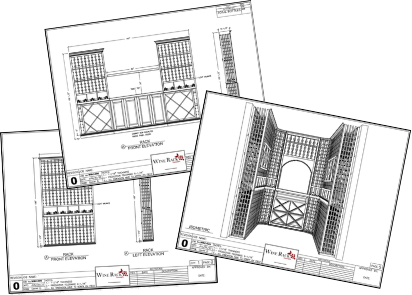
Before fabrication, review a wall elevation showing panel widths, seams, corners, and rack positions. Mark the finish direction and trim locations on the drawing. This planning step helps installers maintain a consistent texture across the wall and gives each joint a clear place in the overall design.
Black oak panels should receive at least 50 lux of wall-level lighting to avoid disappearing into the background. Keep that illumination consistent across the panel field so its finish remains legible alongside the surrounding trim and joints.
What materials are popular for modern wine wall paneling?
Modern wine wall paneling materials often combine wood, stone, metal, and glass rather than relying on one surface. Each material adds a different visual effect: wood brings grain and warmth, stone adds texture, and metal introduces a crisp architectural line. Glass keeps bottle displays in view. The best combination depends on the cellar's design, rack layout, and the role of the wall.
Wood remains versatile because species and finishes create distinct atmospheres. Walnut can establish a dark, rich backdrop, while clear-finished white oak creates a lighter impression. Use wood across a focal wall or as a backdrop for racks, then coordinate the panel grain with the rack orientation. Consistent direction helps the wall read as a considered composition rather than a set of separate surfaces.
Stone and porcelain offer a contrasting route. Natural stone brings variation in color and texture, making it effective behind a display or tasting area. Porcelain typically has water absorption of no more than 0.5%, making it a material option where moisture resistance is a design consideration. Tile can also introduce a deliberate pattern, but grout lines become part of the wall's overall visual rhythm.
Metal paneling and metal accents suit a more contemporary cellar. Type 304 stainless steel is recommended for most wine-cellar interiors. Its restrained finish pairs well with glass and wood, while dark metal can make bottle labels stand out against a lighter surface. Keep the metal finish consistent across panel edges, rack supports, and visible hardware for a unified effect.
Glass is popular where the wine display should remain visible from adjoining rooms. Laminated glass makeups block around 99% of UV, and low-iron glass can offer a clear view through an enclosure. Acrylic can also be considered as a panel material, especially when a design calls for a different visual weight than stone or glass. Compare the material itself and the complete assembly, including framing and attachment details.
For a composed finish, select one primary surface and one or two supporting materials. White oak panels, for example, can soften a metal rack, while a stone feature wall can anchor a glass-fronted display. Review samples beside the chosen lighting, since reflections and finish tones affect how each surface appears. Coordinate seams and panel edges with rack placement before settling on the layout.
Wine Rack Concepts
Wine Rack Concepts, LLC brings wine wall material choices together with storage and cellar design. When wood, stone, and glass need to work alongside bottle display and climate control, a custom wine cellar can connect those decisions in one coordinated plan. Wine racks and the Wall Wine Rack Series offer storage options to consider alongside the wall finish, while wine cellar cooling helps manage the cellar environment.
Turn to Wine Rack Concepts, LLC when you're ready to shape these material choices into a cohesive wine space. Contact Wine Rack Concepts, LLC to discuss your project.
Shape a wine wall around the room you want to live in
A wine wall can do more than hold bottles. It can define a cellar's character, connect with nearby living spaces, or give a tasting area a distinct sense of place. Before settling on the design, consider how you want to use the room and what you want guests to notice first. That purpose can guide the balance between display, storage, and architectural detail.
Think of modern wine wall paneling materials as part of the room's overall composition, not a finish selected in isolation. The strongest design decisions connect the wall with the collection, the surrounding interior, and the way you move through the space. A clear direction makes it easier to create a cellar that feels personal and intentional.
When you're ready to turn that direction into a design, Wine Rack Concepts can help you plan the next step.
Give your collection a setting that feels distinctly yours.
Frequently Asked Questions
What materials work best for wine cellar wall panels and humidity control?
Choose panels with a stable core, sealed edges, and a finish suited to a conditioned cellar. Wood can work well when room humidity remains stable; stone, porcelain, and metal offer alternatives with different appearances and care needs. Humidity control depends on the cellar environment, not the panel surface alone. Coordinate the wall assembly with the cooling system, and avoid leaving panel edges or joints unfinished.
What are the best fire-resistant materials for wine wall paneling?
No material is fire-resistant simply because it is wood, metal, glass, stone, or acrylic. Fire performance depends on the tested panel assembly and finish. Use documented ratings that meet applicable local requirements.
Have an expert help today!
Free 2D wine cellar design