Industrial style wine racking examples for walls and modular kits

*Pictures are renderings. Actual wine racks may look different
Industrial style wine racking turns storage into part of the room's design, pairing metal construction with wood accents or an exposed, utilitarian finish. Wall-mounted displays make use of vertical space, while modular kits offer multiple widths and configurations for layouts that can grow with a collection.
The appeal is clear: exposed metal adds an architectural edge, and open displays keep bottles in view. Choose a design that suits the wall, available floor space, and the way you want to arrange and access your wine.
Explore examples of wall-mounted displays, compare how metal materials shape the look, and see where modular kits can help create a more tailored layout. You'll also find practical planning considerations for bringing industrial character to a home cellar, bar, or dining area while keeping the storage functional.
Key Takeaways
- Match a wall display to the space and the way you want bottles presented, rather than choosing by appearance alone.
- Compare metal finishes and wood accents to create an industrial look that feels cohesive with the room.
- Assess storage capacity by considering the rack's layout, bottle depth, and the usable floor or wall area.
- Plan the rack's placement and wall attachment before installation, especially when building a display that can expand over time.
- For a dedicated cellar, consider how storage design and wine cellar cooling work together to support the space.
Table of Contents
- Wall-mounted wine displays
- Metal rack materials and industrial aesthetics
- What are the best industrial wine racking systems for home cellars?
- How many wine bottles can industrial racking hold per square foot?
- How do you plan and install industrial wine racking?
- Wine Rack Concepts: Wine Cellar Cooling
Wall-mounted wine displays
A wall-mounted display turns vertical space into visible bottle storage without taking up floor area. In a kitchen, dining room, home bar, or commercial venue, exposed metal can give a wall an architectural, workshop-inspired character. The layout also makes bottle shapes and labels part of the decor. Choose a display based on wall width, ease of access, and whether it will provide compact storage, create a focal point, or form part of a larger cellar.
One industrial-style wall shelf example combines solid pinewood shelves with iron pipe. At 36 inches wide, it suits a defined wall section rather than an entire room. The wood softens the dark, utilitarian pipework, while the tiered form gives the collection a strong vertical line. This example shows how mixed materials can balance warmth and industrial character.
Other listings illustrate how dimensions affect placement. A wall-mounted rack measuring 31.7 inches wide, 9.8 inches deep, and 19.7 inches high holds 30 bottles. Those measurements help readers compare the rack's footprint with available wall space before selecting a location. A separate three-tier black-pipe example measures 35 inches. For a longer display, another listing measures 39.4 inches and includes LED lighting and a glass holder. Treat these as distinct design examples, not interchangeable capacity claims.
In the United States, custom industrial-style wine racking is available through wine-cellar design and fabrication services. A tailored layout can account for the wall dimensions, the desired bottle presentation, and whether the display belongs in a cellar or living area.
The Evolution Wine Wall offers a larger-scale storage example with triple-bottle-depth capacity. That configuration places bottles in multiple depths rather than limiting storage to a single front-facing row. For a cellar plan where capacity matters, the situation may call for more than a decorative wall display. The action is to consider a deeper wall system as part of the main storage layout. The result is a display that can contribute meaningfully to a cellar's storage plan while retaining a strong architectural presence.
Before choosing a wall display, measure the usable wall area and mark doors, switches, and nearby furnishings. Next, decide whether bottles should face forward for label visibility or sit in a deeper storage arrangement. Compare rack width and depth with the planned location, then consider how lighting and glass storage affect the composition. A 39.4-inch display with a glass holder serves a different purpose from a five-tier pine-and-pipe shelf. Matching those details to the room creates a display that works as storage and as a deliberate design feature.
Metal rack materials and industrial aesthetics
Metal sets the visual tone, but the surrounding materials determine whether a cellar feels stark or composed. Metal can contribute to a clean, modern look in a streamlined interior. For a warmer contrast, pair a metal structure with wood shelves or cabinetry. The design choice affects more than appearance: it also shapes how the rack relates to flooring, wall finishes, lighting, and nearby furnishings.
Consider a cellar with pale walls and a dark floor. Black metal accents can echo the floor and create a defined visual framework, while lighter wood can soften the contrast. An industrial cabinet example uses black steel accents with Alder or Maple as standard wood options. The situation is a room needing storage that feels integrated rather than purely utilitarian; the material combination gives the bottles a structured setting and adds a warmer finish. It's a useful reference for balancing metal with natural tones.
Glass can make a display feel more open. Wine Rack Concepts, LLC offers cable-and-glass racks and glass-enclosed wine cellars, bringing transparency into designs that may also use wood or metal. If the collection should remain visible, glass can make storage a feature of the room. For a quieter look, choose less prominent details and coordinate the rack with the room's other finishes. Match the degree of openness to the display's purpose.
Use these steps to shape a cohesive material palette:
- Choose the dominant finish. Start with black steel, aluminum, or another metal tone already present in the room.
- Select a counterpoint. Compare wood tones such as Alder and Maple against the floor and cabinetry.
- Set the display level. Decide whether clear glass should showcase the collection or whether the rack should blend into the cellar.
- Repeat details. Carry one metal finish or wood tone into nearby hardware or furniture for visual continuity.
For example, a dining area with dark furniture could use metal framing and wood that connects the rack to the table. In a room with lighter cabinetry, wood could be the visual anchor, with metal providing a crisp outline. These choices help industrial style feel deliberate rather than unfinished. Consider how light, bottle labels, and surrounding finishes will look together before choosing materials.
If your room combines several materials or has an unusual layout, a wine cellar design plan can help organize the palette and storage arrangement around the space.
If your room combines several materials or has an unusual layout, consider wall-mounted metal racks as a way to carry the same finish into different settings. They can be used in kitchens, dining rooms, home bars, living rooms, wine cellars, restaurants, hospitality spaces, and retail displays. A wall-mounted wine rack listing measures 39.8 inches wide; another measures 32 inches and has three tiers, while a further listing measures 100 centimeters, or 39.4 inches. The Modern Industrial Wine Rack is 7.5 inches wide. Custom lighting can be added to metal wine rack displays to highlight a wine collection.
What are the best industrial wine racking systems for home cellars?
The best system depends on the cellar's footprint, collection size, and display priorities. A compact wall rack suits a narrow room, while modular kits can combine multiple widths and configurations into a tailored layout. A cabinet-style system fits collections needing substantial, enclosed storage. Compare usable capacity and dimensions first, then consider bottle access, visual impact, and how the rack fits the room's storage plan.
For a small collection or a focused display, consider a compact industrial-style rack example measuring approximately 28.5 inches tall and 4.5 inches deep. It holds 5 bottles, making it better suited to showcasing a few selections than storing a large collection. The situation: a home cellar has limited wall space and needs a visible accent. The action: use a compact rack for bottles chosen for display. The result: the display adds an industrial detail without taking up much depth, while the rest of the collection can use a separate system.
A larger collection calls for a different approach. One cabinet-style example holds more than 180 bottles and measures 102 inches wide, 19 inches deep, and 91 inches high. Situation: the cellar needs substantial storage in one coordinated unit. Action: plan the layout around the cabinet's full dimensions, including space for access. Result: the storage is concentrated in a defined area, leaving the remaining cellar available for circulation or other uses. Its scale makes precise room planning essential.
Modular metal kits suit cellars where a single standard width won't fit the available wall. Since kits come in multiple widths and configurations, a layout can combine sections to use an irregular wall or organize storage by bottle type. For example, a narrow return wall might take a smaller section, while a longer wall accommodates additional modules. Sketch the room and mark doors, corners, and obstructions before choosing a configuration. This helps the system follow the room rather than forcing the room around the rack.
Use these criteria to compare systems:
- Collection and capacity: Match storage to the collection, distinguishing display bottles from bottles kept in the main reserve.
- Room dimensions: Compare each system's width, depth, and height with the actual cellar layout.
- Storage format: Choose compact, modular, or cabinet-style storage according to the available footprint.
- Long-term layout: Consider whether multiple kit configurations can create the arrangement the cellar needs.
For a home cellar holding a small group of display bottles, the 5-bottle rack offers a focused accent. For a collection exceeding 180 bottles, the cabinet example provides much greater capacity in a defined footprint. Modular kits address spaces between those scenarios, especially when multiple widths help shape a custom arrangement. The practical choice is the one that fits the room's dimensions and makes the collection easy to organize and reach.
How many wine bottles can industrial racking hold per square foot?
There is no single bottle count per square foot that applies to every cellar: the answer depends on whether you mean floor area or wall display area. Rack depth, height, bottle orientation, and aisle space all affect storage. For a useful comparison, divide the rack's stated capacity by its footprint, then account for circulation space separately. This gives a rack-density estimate, not the number of bottles the entire room can hold.
For a cabinet measuring 102 inches wide and 19 inches deep, the floor footprint is about 13.46 square feet. With capacity above 180 bottles, that works out to more than 13.3 bottles per square foot of rack footprint. The cabinet's 91-inch height and three-bottle-deep racking help explain how it stores bottles vertically and in depth. This example describes the unit itself, not a cellar's overall density.
A wall-mounted example gives a different measure. A rack listed as 31.7 inches wide, 9.8 inches deep, and 19.7 inches high holds 30 bottles. Its front-facing rectangle covers about 4.34 square feet, or roughly 6.9 bottles per square foot of wall area. That calculation uses width multiplied by height. It excludes mounting clearances and doesn't represent floor area, since the rack uses the wall.
Use a consistent method when comparing layouts:
- For floor-standing racks: multiply rack width by depth, then convert the result from square inches to square feet.
- For wall displays: multiply the visible rack width by height to estimate the wall area occupied.
- For storage density: divide the rack's stated bottle capacity by its calculated footprint or display area.
- For room planning: account separately for doors, access, and usable space around the rack.
For example, a cellar with a narrow aisle may fit a high-capacity rack but still need open floor space for access. A wall-mounted display can preserve floor space, although its bottle count depends on its configuration. Custom racking also varies by layout, so assess each planned section before combining them. Do not compare wall-area density directly with floor-footprint density: they describe different surfaces and answer different planning questions.
Use the resulting figure to compare layouts. If one stores more bottles per square foot, check whether it also provides the access and arrangement your collection needs. A deeper rack may increase capacity without taking up more width, while a taller system uses vertical space. Start with the actual rack dimensions and stated capacity, then assess the remaining cellar space separately.
For broader planning, label-forward wine racks make it easier to find a favorite bottle. The Ordinary Fellow winery wine cellar holds 552 bottles, while the Banburry Lane basement wine cellar in Alberta, Canada, holds approximately 459 bottles. The Hilton Norfolk The Main wine cellar holds around 3,000 bottles.
A wine cellar can provide ample wine storage and controlled temperature for collections of 500 bottles or more; a small wine cooler can keep 20-odd bottles chilled. These examples show why rack density is only one part of choosing storage: total capacity and temperature control matter too.
How do you plan and install industrial wine racking?
Start with the wall and the collection, then choose a rack configuration that suits both. Measure the intended area, including corners, door swings, and nearby furniture. Mark the rack's width and height on a room sketch. For a multi-section layout, map each section separately so the joins and bottle rows align. Planning ahead helps prevent a striking metal display from crowding the route through the cellar.
Before installation, identify the rack's mounting points and the wall structure behind them. The Modern Industrial Wine Rack is intended to be secured to a wall stud. Choose mounting hardware suited to the wall and follow the rack's installation instructions. Follow the instructions for the specific rack rather than assuming every metal system uses the same hardware or attachment pattern.
- Measure the location. Record the available wall width and height, then compare them with the rack dimensions.
- Plan the arrangement. Mark the position of each rack section, keeping the intended bottle layout in view.
- Locate the attachment points. Align the rack with wall studs where the product instructions call for stud attachment.
- Use the specified hardware. For the Modern Industrial Wine Rack, the listed mounting method uses two screws.
- Check the completed layout. Confirm that the installed rack sits as intended before arranging bottles.
Consider a narrow cellar wall beside a doorway. The situation leaves limited space for floor-standing storage, but the wall offers a clear vertical area. The action is to measure that area, position the display outside the door's swing, and plan its attachment to a stud. The result is visible bottle storage that uses the wall without blocking the room's main route. A different wall may require a modular arrangement, so mark every section before beginning installation.
Rack placement also affects how the collection works day to day. For example, bottles organized by region or drinking occasion are easier to browse when the rows reflect that arrangement. Decide which bottles should be easiest to reach, then position the corresponding section at a convenient height. Leave space around trim and furniture so the finished display looks intentional rather than squeezed into a leftover gap.
For an unusual wall shape or a layout with several rack sections, plan the arrangement before installation so it fits the room.
Wine Rack Concepts: Wine Cellar Cooling
Wine Rack Concepts offers custom wine cellars and wine cellar cooling, making it possible to plan storage and the cellar environment together. If you're designing around industrial metal racking, consider cooling alongside rack placement, room layout, and storage needs. Planning these elements together helps align the design with the space.
For a new or reworked cellar, Wine Rack Concepts offers Custom Wine Cellar planning and Wine Cellar Cooling. Explore wine cellar cooling options as you consider how climate control fits your storage plan. If you're ready to discuss your project, contact Wine Rack Concepts.
Shape a cellar that can grow with your collection
Plan beyond the first installation. A well-considered industrial style wine racking layout should suit the room today and allow for future changes to your collection. Think about how the display will work with furnishings, lighting, and the cellar's intended use. A broader view can help make the rack part of a cohesive space.
Wine Rack Concepts offers Wine Racks, Custom Wine Cellar design, and Wine Cellar Cooling, bringing storage and the cellar environment into the same planning conversation. If you're ready to develop your layout, start with the room dimensions and the way you want to arrange your collection.
Your collection deserves a setting that feels considered, functional, and distinctly yours.
Frequently Asked Questions
How do temperature, humidity, and light affect wine stored in industrial racks?
Temperature, humidity, and light matter for wine storage, regardless of a rack's industrial design. Temperature swings can disrupt consistent aging, while very dry air may dry corks and compromise their seal. Excess humidity can encourage mold on labels or nearby materials. Prolonged direct light can affect wine quality. Position an open metal rack away from sunny windows, and plan cellar cooling and lighting as part of the storage environment.
Have an expert help today!
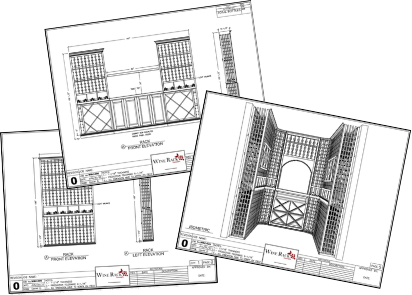
Free 2D wine cellar design