Custom Wine Display Cabinets in Wood, Metal and Bespoke Finishes

*Pictures are renderings. Actual wine racks may look different
A custom wine display cabinet can be made from more than wood. White oak, metal, and customized finishes offer distinct ways to shape the display. Choose based on the room, your bottle collection, and the look you want.
A well-designed display should suit its setting and give each bottle a purposeful place. Whether you’re planning a residential feature or a commercial showcase, the material is only one part of the decision.
This guide explains how wood, metal, and custom finishes shape the design, then covers bottle formats, cooling, and installation. Use these considerations to match a display to your space and storage needs, balancing presentation with everyday practicality.
Key Takeaways
- Choose cabinet materials and finishes to complement the room while supporting the display you have in mind.
- Plan storage around the bottles you intend to showcase, since different formats can affect rack layout and accessibility.
- Consider venting and installation early so the cabinet design works with its location and cooling approach.
- Residential and commercial displays have different space, presentation, and day-to-day use priorities; account for these when shaping the design.
- Wine Rack Concepts, LLC offers wine racks, wine cellar cooling, custom wine cellars, and the Wall Wine Rack Series for projects that need coordinated storage solutions.
Storage for different wine types and bottle formats
A well-planned display makes wine easy to see and access while providing practical storage. First, distinguish bottles for display, reserve storage, and tasting, then plan each area around your collection.
Display Rows and Bulk Storage
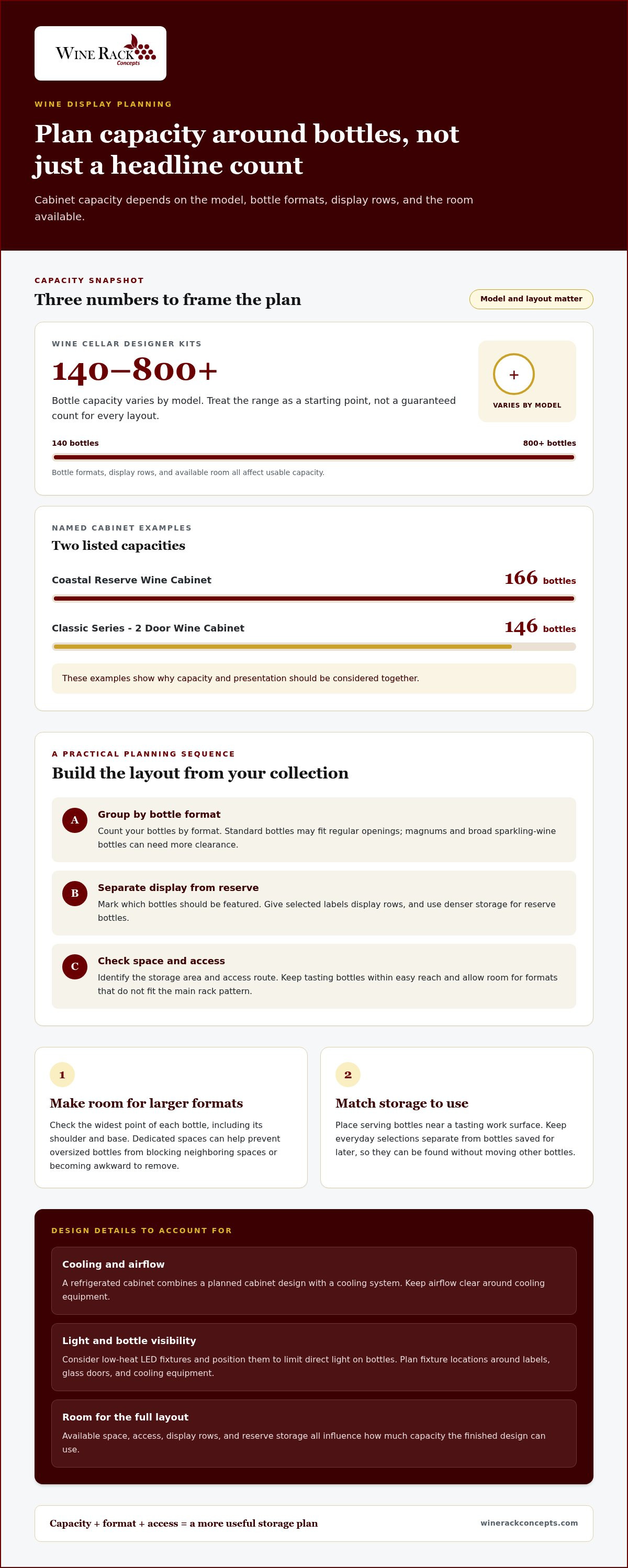
Display rows bring selected labels forward, while bulk storage keeps additional bottles organized behind or below them. Plan the arrangement around how you use the collection: place bottles for a tasting area within easy reach, and keep reserve bottles in denser storage. The Coastal Reserve Wine Cabinet is listed with capacity for 166 bottles, while the Classic Series - 2 Door Wine Cabinet holds 146. These examples show why capacity and presentation should be considered together.
Storage Styles
Traditional wooden racks create a familiar cellar look, while modern designs can make the display a focal point in living or dining spaces. Cable wine racks use slender supports for a more open visual effect, which can suit a wall display where bottle visibility matters. Choose a style by considering the room’s existing finishes, the visibility you want, and whether bottles need to be stored or featured. A custom wine cellar can bring those storage and display decisions into one planned space.
Bottle formats affect rack openings and how labels face outward. Standard bottles can use regular rows, but larger or unusually shaped bottles may need dedicated spaces. Group bottles by format before finalizing the layout to avoid sacrificing display space or blocking access to neighboring bottles.
A refrigerated wine cabinet combines a planned cabinet design with a cooling system. Unlike a freestanding wine refrigerator, which is a separate appliance with its own footprint, a cabinet can be designed to suit the room and display. Compare the available space, storage needs, and how closely you want the unit integrated with the interior.
For display lighting, consider low-heat LED fixtures and position them to limit direct light on bottles. Plan fixture locations in relation to labels, glass doors, and cooling equipment.
Routine care includes keeping the storage area clean, maintaining clear airflow around cooling equipment, and watching for changes in temperature or moisture. If bottles become hard to reach or a row feels crowded, reconsider the layout before adding storage.
When choosing a custom wine cabinet maker, review examples of residential and commercial work—such as the bespoke built-in cabinetry showcased by Finest Furniture Studio—then discuss bottle formats, cooling, finishes, and installation as parts of one project. A good design process should explain how each decision shapes both the finished cabinet and its function.
A small space may suit a wall section, alcove, or dining-area feature instead of a separate cellar. Measure the available area and access route first, then decide whether you need display rows, reserve storage, or a compact tasting surface.
Intended use for different bottle types
Capacity is useful only when the rack suits the bottles you store. Before choosing a cabinet, group your collection by bottle shape, intended use, and how often you reach for each wine.
Standard bottles may fit regular rack openings, while magnums or broad sparkling-wine bottles can need more clearance. Check the widest point of each format, including its shoulder and base, and reserve space for bottles that need extra room. This helps prevent oversized bottles from blocking neighboring spaces or becoming awkward to remove.
Consider how the cabinet will serve your collection. A showcase can give prominent positions to special bottles, while reserve storage can prioritize organized access. If you host tastings, keep serving bottles near the work surface. Separate everyday selections from bottles saved for later so guests and household members can find what they need without moving other bottles.
Capacity and Kit Planning
Wine cellar designer kits are described as holding from 140 to 800+ bottles, depending on the model. Treat that range as a starting point, not a count of how many bottles every layout will hold. Bottle formats, display rows, and the room available all affect usable capacity. Count your current bottles by format, then allow the design to accommodate the mix you expect to keep.
Kit pricing depends on the model, materials, rack configuration, and cooling requirements; project pricing is provided after a quote request. Those same choices affect how a kit fits its intended space. A design for a compact home collection may emphasize accessible display, while a larger cellar plan may combine showcase rows with denser storage.
For a practical planning sequence, list bottle formats first, mark which bottles should be displayed, then identify the storage area and access route. Allow for bottles that don’t fit the main rack pattern. This makes your capacity estimate more useful than relying on a single headline bottle count.
A custom wine display cabinet can combine distinct bottle positions with a consistent finish, but the internal layout should follow the collection rather than a standard bottle count. Share the format mix, display priorities, and available room in a wine storage design request to turn those requirements into a considered layout.
Wood, metal, and bespoke finishes
Materials shape both the cabinet’s character and how it relates to the room. Compare the surrounding finishes, then decide whether the display should blend in or stand out as a feature.
Cabinet Materials and Finishes
For a traditional look, consider wood finished to complement nearby furniture, flooring, or trim. White oak is one wood option for wine storage. A custom finish can coordinate with the room’s palette, while glass panels keep bottles visible. Consider the cabinet material and finish together, since both affect its overall appearance.
In a dining room with warm wood furniture, a coordinating cabinet finish can help the display feel integrated. In a contemporary kitchen, a contrasting finish can define the wine area as a feature. In a wine cellar, consider how the cabinet’s visible surfaces relate to doors, racks, and nearby walls. Compare finish samples with the room’s actual materials before choosing a color.
Metal can create a crisp, modern look, while wood adds visual warmth. A mixed-material design might pair a wooden cabinet exterior with metal details or glass panels. Keep the palette intentional: choose one dominant material, then use secondary finishes to define edges, supports, or display areas. This helps the cabinet feel like part of the room rather than an isolated object.
Rack Materials and Finishes
Rack material influences how bottles appear inside the cabinet. Wooden racks can create a classic cellar look, while metal supports can emphasize an open, contemporary layout. Cable systems offer another visual option, with slim lines that keep attention on the bottles. Compare the rack finish with cabinet hardware and visible framing for a cohesive display.
Before choosing a rack finish, identify which parts will be visible through the cabinet doors. A dark metal rack, for example, can define bottle rows against a light interior, while a wood rack can echo nearby cabinetry. Glass systems can keep the display visually open. Choose a combination that suits the room’s palette and how prominently you want the collection to feature.
Use a simple selection process: note the room’s main materials, choose a dominant cabinet finish, then compare rack options alongside it. For example, pair a white oak tone with subtle metal details, or coordinate the finish across the cabinet and rack. This creates a consistent design while keeping the bottles in focus.
Cabinet venting and installation
Cooling and placement affect how a wine display fits the room and operates. Plan the cabinet, cooling approach, and installation route together, rather than treating the enclosure as furniture alone.
Start by identifying the cooling system. A self-contained refrigeration unit sits with the cabinet, so its heat exhaust needs a suitable path into the surrounding space. A dedicated wine cellar cooling system uses a different arrangement, with equipment and airflow planned for the installation. Either way, the design must keep cooling components accessible for service.
Room conditions matter. A cabinet in a sunny dining area faces different conditions from one in an interior cellar. Note nearby windows, heat-producing appliances, doors, and typical activity in the room. These details help determine where the display should go and how the cooling setup should relate to its surroundings.
Before installation, document the location and access route. Measure the opening, ceiling height, doorways, and turns between the delivery point and final position. A cabinet intended for a basement, for example, may need to pass through a narrow stairwell. Include planned cooling equipment and fixed trim when measuring the available space.
- Placement: Mark the cabinet footprint and note nearby heat sources, windows, and doors.
- Access: Map the route from the entrance to the installation point, including tight turns.
- Utilities: Coordinate power access and cooling connections with the room plan.
- Service: Preserve access to the cooling unit and its ventilation path.
These steps help resolve practical constraints before assembly. A wall opening, finished floor, or built-in surround can affect how components are brought into position. Planning ahead also helps protect visible finishes during installation.
Installation quality depends on more than the cabinet’s alignment. The cooling unit, vent path, door operation, and interior layout must work together. A decorative panel, for example, should not obstruct an exhaust opening, and a door should open without hitting nearby cabinetry. Careful craftsmanship brings these functional details together with the finished display’s appearance.
After installation, keep the surrounding area clear and follow the cooling system’s care instructions. Dust or stored items near a vent can restrict airflow, and blocked access can complicate routine maintenance. A quick visual check of the vent path and cabinet surroundings helps keep the setup clear.
For a built-in project, finalize the cabinet location and cooling plan before completing surrounding finishes. This allows the installer to account for the enclosure, equipment, and access needs together, rather than modifying a finished wall or cabinet run afterward.
Residential and commercial wine displays
Residential and commercial displays serve different needs, even when both showcase wine. A home wine wall may complement a dining room, while a restaurant display must support service routines and customer access. Start by defining who will use the display, what it should showcase, and how it fits the room.
At home, a display often shares space with furniture, lighting, and everyday movement. A dining-room feature, for example, can keep selected bottles visible while reserve storage sits in a nearby cellar. Consider sightlines from the table, cabinet-door clearance, and access while entertaining. A collection that is rarely shown may need less prominent presentation than bottles chosen for guests.
Commercial spaces have a different rhythm. A restaurant, tasting room, or hospitality venue may need staff to retrieve bottles quickly while customers view the collection. Commercial wine racks can separate featured bottles from backstock while keeping service routes clear. In a tasting room, place displayed selections near where staff introduce or pour them.
A wine wall can serve as a visual anchor in either setting, but its position should reflect the room’s purpose. At home, it might define a dining nook or connect the kitchen with an entertaining area—a layout consideration often emphasized by interior design firms like Atech Interiors when planning multifunctional living spaces. In a hospitality space, it can draw attention without obstructing circulation. Map entrances, seating, service counters, and nearby doors before choosing its location.
Use these project questions to distinguish the two settings:
- Residential: Which bottles should guests see, and where will household members retrieve them?
- Commercial: Can staff access stock without crossing customer seating or blocking service?
- Both: Does the display’s finish and scale suit the room’s existing design?
Cooling requirements also depend on how the display will be used. A private wine cellar can be planned around a household collection and its storage arrangement. In a commercial space, coordinate the cooling plan with the display location and daily workflow. In either case, decide how wine cellar cooling relates to the room before finalizing surrounding finishes.
For a residential project, prioritize integration and convenient access. For a commercial project, prioritize visibility, retrieval, and movement through the space. A brief that identifies users, featured bottles, backstock, and service routes gives the design a practical foundation.
Wine Rack Concepts: Wine Racks
Wine Rack Concepts, LLC helps turn your storage plan into a display suited to your space and collection. If your project needs coordinated bottle storage and cellar design, its Wine Racks and Custom Wine Cellar offerings provide a natural starting point. The Wall Wine Rack Series can suit projects where vertical display is central, while Wine Cellar Cooling addresses the climate-control part of a planned storage space. Share your intended use, bottle formats, preferred materials, and installation setting to shape a design around practical needs as well as appearance. For a residential feature or a commercial display, bring those priorities together before finalizing the layout. Contact Wine Rack Concepts, LLC to discuss your wine display project.
Shape a Display Around Your Collection
Turn your preferences into a design brief. Note which bottles deserve a visible place, how the display should relate to the room, and which practical needs matter most. A custom wine display cabinet works best when appearance and everyday use are planned together, rather than treated as separate decisions.
Bring the key details together: available space, the look you want, bottle formats in your collection, and the display’s intended setting. This gives the design process direction while leaving room to refine the details. A thoughtful plan can make the finished display feel like a natural part of your home or commercial space.
Your collection can become a feature that feels distinctly yours. Start with a clear vision, then bring the details together in a design suited to your space.
Frequently Asked Questions
What type of wood are the showcase displays made of?
White oak is one wood option, and wooden racks can also be finished with stain or lacquer. Choose a tone that relates to nearby flooring, trim, or furniture. For example, compare a white oak sample with the room’s cabinetry before deciding. This helps you see how the grain and finish work with existing materials and the bottles on display.
What is a custom wine display cabinet?
A custom wine display cabinet is designed around a particular space, collection, and presentation goal. It can combine visible bottle positions with less prominent storage, arranged to suit how you use the room. For example, a dining-room installation might showcase selected bottles while keeping its proportions in harmony with nearby cabinetry.
How much does a wine display cabinet cost?
The price depends on the project and is provided after a quote request. Factors include dimensions, framing, insulation, doors, lighting, cooling equipment, labor, and rack selection. A display added to an existing space has different requirements from a complete climate-controlled cellar build. Defining the location, materials, and intended use helps establish a clear scope for the project.
What materials and finishes work well for a wine cabinet?
Choose materials and finishes that suit the room and the cabinet’s purpose. Rack options include wood, metal, and acrylic; wood can be stained or lacquered, and glass can form part of an enclosure. For example, a wood finish can coordinate with existing millwork, while metal or acrylic can suit a contemporary interior. Consider how visible surfaces and hardware work together.
What size and bottle capacity should I choose?
Start by measuring the available space and grouping the bottles you plan to store by format, including larger bottles. Allow for access, door movement, and surrounding trim. Usable capacity depends on the rack layout and bottle mix, so a headline count may not reflect the space available for your collection. A collection with magnums, for example, needs different openings from one with standard bottles alone.
What temperature and humidity should a wine display cabinet maintain?
The right storage conditions depend on how the cabinet will be used and the room around it. A cooled unit can provide temperature-controlled storage; a display-only cabinet does not serve that function. Consider sunlight, nearby heat sources, and the room’s usual conditions when deciding whether climate control belongs in the design.
Should a custom wine display cabinet use cooling or be for display only?
Choose cooling when the cabinet is intended for temperature-controlled storage. A display-only design suits bottles presented without that function. The decision depends on how you’ll use the collection, the room conditions, and whether the cabinet is part of a larger cellar. A custom wine display cabinet can be planned alongside a self-contained refrigeration unit or dedicated wine cellar cooling system.
What are the steps to design and install a wine display cabinet?
Begin by recording the room dimensions, bottle formats, display priorities, and cooling needs. Then choose the rack layout, materials, doors, and lighting, coordinating them with the installation location. Measure the delivery route as well as the final space, since stairs and tight turns affect access. Before installation, align the cabinet plan with surrounding finishes and cooling requirements.

Have an expert help today!
Free 2D wine cellar design