Backlit LED Panel Examples for Modern Wine Walls

*Pictures are renderings. Actual wine racks may look different
A wine wall can do more than store bottles; it can become a focal point in the room. Backlit LED panels for modern wine walls bring the bottles and racking into the design, while LED lighting produces less heat and uses less energy per hour than fluorescent lighting. Adjustable brightness and tinted light can further shape the display and the room's ambience.
The effect depends on more than choosing a glowing surface. Panel placement, light direction, dimming, and the relationship between the panel and the racking all influence whether bottles remain clear or reflections distract from the display. A restrained, indirect approach can keep attention on the collection while creating a softer atmosphere.
The examples ahead show how different backlighting approaches can complement a wine wall, from illuminated panels to lighting integrated with the racking. You'll also learn which technical details matter, how adjustable light can change a room's feel, and how to plan a display that balances visual impact with practical design.
Key Takeaways
- Choose narrow-spot, small-aperture lighting and keep its color temperature no higher than 2700 K for a considered cellar display.
- Positioning one light above each bottle row can help labels read clearly from top to bottom.
- Leaving about one inch between an acrylic panel and the wall or shelf creates space for the lighting setup behind it.
- Consider how rack finishes interact with illumination: glossy metal can reflect panel light and create glare up close.
- Plan for upkeep by cleaning acrylic with a soft, dry or lightly damp cloth, and avoid ammonia-based glass cleaners.
Table of Contents
Why Choose LEDs for Modern Wine Cellar Lighting?
Backlit LED panels for modern wine walls create a bright backdrop while keeping attention on the bottle display. In one wine room design, two acrylic LED panels frame a shelf and display area. The acrylic board is 3/4 inch thick, making the panels a distinct architectural feature rather than a simple light strip.
LEDs also suit a residential cellar because they produce less heat and use less energy per hour than fluorescent lighting. LED lights in wine cellars last twenty times longer than fluorescent lights. Together, these qualities support a display while adding less heat from the lighting itself.
Situation: A wine room needed to showcase bottles against illuminated surfaces. Action: Two acrylic panels were installed with a shelf and display area between them. Result: The lighted backdrop gives the bottles a defined presentation while preserving a central space for selected pieces.
Racking and panels have different jobs. Metal pegs or racks should support the wine bottles; an acrylic panel should serve as the illuminated surface unless it has been specifically designed and supported to bear a load. In this example, triple-deep metal wine pegs hold up to three bottles per pair. The rack provides storage while the lighting remains integrated into the surrounding display.
For label-forward presentation, double-deep matte-black metal racks position bottles with their labels facing outward for easy recognition. Against a glowing panel, the dark rack creates contrast, while forward-facing labels make it easier to scan a collection. The result depends on coordinating rack depth, bottle orientation, and light placement, not simply increasing brightness.
How much do backlit LED panels for wine walls cost? The price depends on panel dimensions, acrylic and frame choices, lighting controls, rack integration, and installation requirements. A project-specific quote request is needed to establish the cost.
How energy-efficient and long-lasting are backlit LED panels? LED lighting uses less energy per hour and produces less heat than fluorescent lighting, while LED lights in wine cellars last twenty times longer. These qualities make LEDs a practical option for a display that stays illuminated regularly.
Which backlit LED panel brands or suppliers serve U.S. customers? The relevant supplier roles are architectural LED-panel suppliers or acrylic fabricators, coordinated with a wine-wall designer or installer. For a custom display, the important step is matching panel dimensions and lighting integration to the rack layout.
Soft, indirect lighting hidden from view is recommended. LEDs also provide better color consistency, produce less heat, and use less energy per hour than fluorescent lighting.
The Phoenix wine wall uses double-deep matte-black metal peg racks that can accommodate up to 150 wine bottles. A fireplace separates three upper wine-rack sections from two lower sections.
Technical considerations for wine-cellar lighting
Wine cellar lighting works best when coordinated with bottle placement, reflective surfaces, and cooling. For acrylic panels, the lighting technique places translucent acrylic about one inch from the wall or shelf, creating room for light behind the surface. This makes panel depth part of the cellar design, rather than a detail to add after installing the racking.
A useful design step is matching the light source to the display. Architect Mayur Modi recommends narrow-spot, small-aperture LED lights, a color temperature no higher than 2700 K, and high lumens. He also recommends placing one light above each row of bottles. This arrangement can illuminate labels from top to bottom, while a broad panel can create a more continuous background.
How do LED panels compare with LED strip lighting for wine walls? A panel creates a broad illuminated surface, while strips provide a narrower line of light. Acrylic LED strips can sit in a channel behind a panel, concealing the source. A failed strip section can typically be repaired without removing the entire panel or racking.
Glare and uneven brightness often come from the relationship between light and nearby materials. Glossy metal racking can reflect panel light and create glare for people standing close. A practical design sequence is to position the light, review it from the room's main viewing angles, then adjust the panel, rack finish, or light direction. Narrow-spot fixtures can also create hotspots if their beams do not align with bottle rows.
What ventilation and heat management protect wine from LED lighting? LEDs produce less heat than fluorescent lighting, but a wine cellar still needs cooling designed for its enclosure. For glass-walled rooms, a split-type cooling system can vent heat outside the room. In one wine wall project, ducted cooling distributes air throughout the cellar, while a custom wood grille conceals two visible vents.
Traditional wine cellars often make woodwork and decorative fixtures central visual elements. Modern lighting can instead emphasize clean lines, concealed sources, and glass. Neither approach replaces careful climate planning. For example, a wine wall uses dual-paned insulated glass doors to help maintain cool air and reduce cooling-system noise in the dining room.
Tempered glass adds another technical consideration. One wine cellar project used ¾-inch tempered glass for its room enclosure. In another wine room, acrylic panels sat within metal frames, with insulation sealing the channel between frame and glass to address condensation. These examples show why lighting, glazing, and enclosure details belong in the same plan.
For residential or commercial wine cellar design, aligning these elements early helps integrate illumination with racking and cooling. A wine cellar design plan can bring panel placement, glass, and lighting into one coordinated layout.
Adjustable backlighting and room ambience
Adjustable backlighting lets a wine display shift between a clear showcase and a softer room feature. In the Phoenix wine wall, LED backlighting can be adjusted to suit the homeowner's mood and create ambience. This flexibility lets the display feel prominent during entertaining, then more restrained when the room is used for dining or relaxation.
Situation: The Phoenix wine wall needed to serve as both bottle storage and a visible design element. Action: Adjustable LED backlighting was integrated behind the display, with light also adjustable remotely. Result: The homeowner can change the wall's effect without changing the racking or moving the bottles. The lighting remains part of the room's overall composition.
Dimming gives the display another kind of control. A dimmer can reduce panel brightness for evening use or raise it when daylight makes the wall less visible. Planning dimming into an acrylic panel setup is especially useful because brightness can be tailored for daytime and entertaining. The aim is not maximum output at every moment, but a setting that suits the room and occasion.
Color tint can also change the atmosphere. LED light can be tinted to create a desired color, giving a homeowner another way to coordinate the wine wall with nearby finishes. A restrained tint can emphasize the display without competing with bottle labels. In a functional cellar, neutral-looking light may keep the collection visually clear; in a dining area, a more atmospheric effect may better complement the space.
Control choices work best when planned around how people use the room. A simple sequence helps clarify the design:
- Set a brighter scene for selecting bottles or viewing labels.
- Use a dimmer setting when the wall should recede during dinner.
- Choose a tinted effect when the display needs to complement the room's palette.
These scenes are examples, not fixed presets. Their purpose is to make lighting responsive to the room's changing function.
A cabinet or enclosed display can make brightness and reflections feel more concentrated than an open wall. In that situation, dimming controls the visible glow, while careful positioning keeps the light focused on the bottles. The Phoenix example shows how adjustable backlighting can support a feature wall; a smaller cabinet can use the same principle at a more intimate scale.
Before installation, match the desired effect to the display's daily use. Decide whether the wall should read as a bright focal point, a subtle background, or a flexible feature. Then coordinate panel placement, dimming, and tint with the bottles and surrounding room. This order keeps adjustable light both decorative and functional.
Panel integration with wine racking systems
Panel placement should follow the bottle layout, not compete with it. Start with the racking plan: mark each row, bottle position, shelf, and display area. Then locate the illuminated surface behind the intended view. This sequence helps align the panel with the wine and prevents rack supports from interrupting the visual field. For a wall with mixed storage and display zones, plan each zone separately before settling on panel dimensions.
Acrylic LED strips can sit in a channel behind the panel, concealing the lighting source and creating a cleaner relationship between the illuminated surface and the racking. The channel also supports targeted maintenance: a failed section can typically be repaired without removing the entire panel or racking. That access matters when a wall combines multiple rack sections with a continuous lighted backdrop.
How do you plan and install backlit panels in a wine wall? First coordinate the panel layout with bottle rows, rack supports, and the cooling system, then integrate the lighting channel behind the panel. This order preserves access to serviceable lighting without disrupting the completed racking system.
Situation: A wall includes both bottle storage and a central display shelf. Action: The design assigns the shelf and bottle rows distinct zones, then aligns panel edges with those boundaries. Result: The display reads as an intentional composition, while the racking remains visually clear and usable.
Load-bearing parts and illuminated surfaces need separate roles. Wine pegs, shelves, or other racking components support bottles; the panel provides the lit background. In a design using metal pegs, keep their attachment points independent of the panel channel. This separation preserves a clear maintenance route and avoids placing bottle loads on a surface designed for illumination.
Plan wiring and access alongside the cooling system. Coordinate lighting channels and service points with the wall layout so future repairs do not require dismantling bottle supports. A design with concealed strips should still leave a practical way to reach the channel. This coordination also helps prevent panel framing from blocking vents or interfering with air distribution.
Before final assembly, review the elevation from the room's main viewing positions. Check that panel boundaries align with the bottle rows, rack hardware does not obscure the light, and shelves remain accessible. Then confirm the maintenance route for each channel. These steps bring the lighting, racking, and cooling layout together in one functional wine wall, rather than treating each as a separate installation.
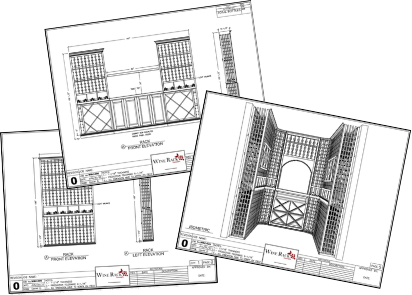
The featured wine rack system is divided into five sections. Treat each section as part of the panel and service plan, keeping transitions aligned with the racking while preserving access to lighting channels. The Newport Beach wine room uses a WhisperKOOL 7000 split-type, ceiling-mount cooling system. Its placement should be considered alongside panel framing and rack supports so that the illuminated surface does not compromise cooling access.
In the Phoenix wine wall, the ducted split cooling system is positioned in the attic, and its air is distributed throughout the cellar. This makes coordination between the wall design and air distribution important: keep panel framing and racking from obstructing airflow. Reviewing the full elevation with both lighting and cooling routes in mind helps the illuminated backdrop, bottle storage, and cellar systems work together.
Backlighting wine displays
A backlit wine display works best when its illuminated surface supports the bottles rather than competing with them. Translucent acrylic can serve as a wall panel or shelf detail, and can also extend into ceiling or flooring accents. For a modern wine cellar, choose one main display surface first. Add secondary illuminated elements only when they reinforce the same visual composition.
What types of backlit LED panels work best for modern wine walls? Translucent acrylic panels suit broad, continuous displays, while acrylic shelving or smaller panel sections can define selected bottle zones. The best format depends on the racking layout, available wall area, and whether the collection should be the focal point.
What materials and finishes diffuse light evenly behind a wine display? Translucent acrylic is a practical diffuser because light spreads across its surface rather than appearing only as a visible strip. Panel finish, spacing, and LED strip placement behind it all affect how evenly the glow appears. Conceal the light source and assess the panel across its full face.
Situation: A homeowner wants to showcase a curated collection without making every wall surface luminous. Action: Use a broad backlit panel behind the principal bottle display, then leave surrounding walls and shelving unlit. Result: The collection gains a clear visual center, while contrast preserves the room's other finishes.
A second approach makes lighting part of the architecture. A panel, for example, can continue from the wall onto a shelf detail, visually linking the bottles with a smaller display area. Ceiling accents can extend that design overhead, while floor accents can mark a transition into the cellar. Use these elements selectively; too many illuminated surfaces can distract from the wine.
Plan the display around viewing distance and bottle arrangement. First, locate the rows intended for everyday selection. Next, align the illuminated panel with those rows and the supporting racking. Then view the composition from the room entrance and nearest seating area. This helps reveal dark edges, visible light sources, or reflections that may interrupt the overall effect.
Care matters after installation. Clean acrylic panels with a soft, dry or lightly damp cloth. Avoid ammonia-based glass cleaners, which can cloud or micro-scratch acrylic. Gentle cleaning helps preserve the panel's clarity and the display's even appearance over time.
Finally, coordinate the lighting plan with the cellar's cooling and enclosure design. A display panel is a visual feature, not a substitute for temperature control. Planning the illuminated surface, bottle storage, and cooling together helps keep the wine wall both attractive and functional.
Wine Rack Concepts
Wine Rack Concepts helps coordinate a wine wall's lighting, bottle layout, and room requirements. If you're planning backlit panels, a custom wine cellar design can align the display with wine racks and cooling needs, rather than treating each element as a separate decision. The Wall Wine Rack Series can also help shape how the bottle arrangement fits the available wall and intended presentation.
This is a useful next step when you're moving from lighting ideas to a complete plan, especially if the wall must balance bottle storage, an illuminated focal point, and cellar conditions. Share your room dimensions, preferred display style, and collection needs so the design can reflect how you'll use the space.
Shape Your Wine Wall Around the Collection
The next step is to turn the lighting idea into a layout that suits your room and collection. Consider how the display will work alongside bottle storage, room finishes, and the cellar environment. Backlit LED panels for modern wine walls work best when their placement is planned as part of the complete space, rather than added after the racking decisions.
Wine Rack Concepts can coordinate wine racks, wine cellar cooling, and a custom wine cellar in one considered design. This is a natural fit when you're planning a new cellar or refining a wall display and want its visual character and practical requirements considered together.
With a clear plan, your display can reflect your collection and feel at home in the room.
Frequently Asked Questions
What color temperature and brightness are ideal for displaying wine bottles?
For wine-cellar lighting, architect Mayur Modi recommends a color temperature no higher than 2700 K and high lumens. Brightness should make labels easy to see without creating distracting glare across the display. A practical approach is to pair focused light with dimming, then assess label visibility from the places people will view or select bottles. This helps balance clear presentation with the room's intended ambience.
What electrical codes and safety rules apply to wine wall LED lighting in the United States?
Electrical requirements depend on local rules applicable to the project and the lighting equipment's installation instructions. Before work begins, have a qualified electrician determine which requirements apply to the cellar and its wiring. The layout should also account for the room's cooling equipment, maintenance access, and potential condensation around glass or panels. Keep electrical components installed and protected according to their instructions and applicable local requirements.
Have an expert help today!
Free 2D wine cellar design